Insights
Sales Kickoff Opener Film: A Series B Playbook
A production playbook for the sales kickoff opener film: what it must do, when to engage a studio, and how to turn one SKO into a year-long content system.
By the EXV team. Published June 19, 2026.
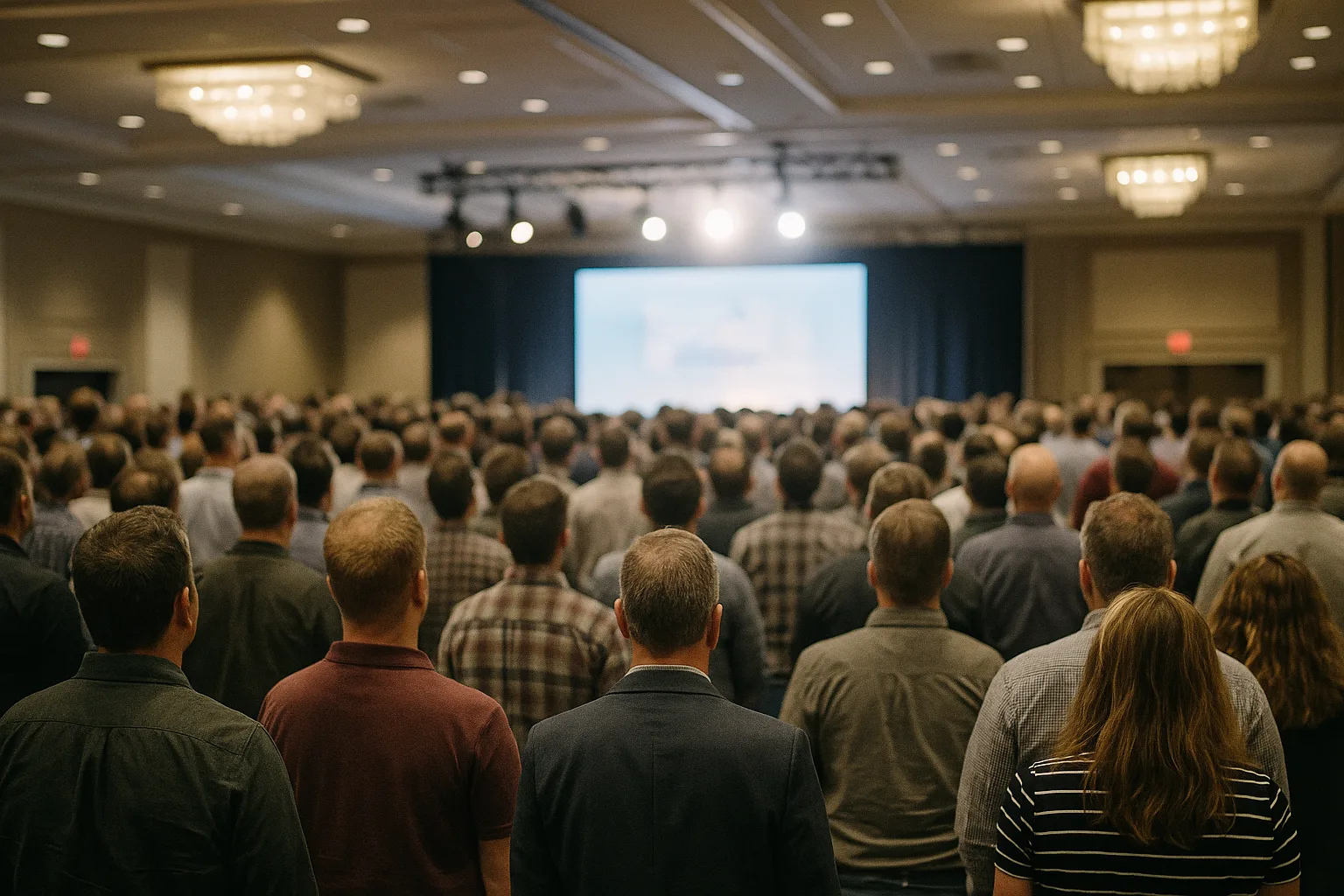
A sales kickoff opener film is the cinematic short that plays right before your CEO takes the stage. Its job is narrow and high-stakes: energize the room, align the team on the year’s strategy, and carry the theme that threads through every session. Treat it as a content asset instead of a one-night expense, and it works all year. Not just for one night.
01 The basics
What is a sales kickoff opener film?
A sales kickoff opener film is the cinematic content that opens an SKO general session, not the stage that content plays on. It’s the hero asset of your kickoff. It sets the emotional and strategic tone of the room before any executive speaks, and it visually establishes the theme the rest of the event builds on.
This is a real enterprise deliverable, not a boutique nicety. Microsoft pays a production studio to open its largest sales and partner gatherings. CG Creative Studios produced the opening performance and general-session content for Microsoft’s MGX Global Exchange and related global partner meetings, with one annual keynote production for 4,800 field sellers, per the studio’s client page. That’s the category. The question for a Series B company isn’t whether the opener matters. It’s how to get that authority without a full-crew budget.
A note on language. We call this the sales kickoff opener film. You may also hear keynote opener or general session opener, the universal cross-event terms. We avoid “show opener” and “sizzle reel” on purpose. One reads as stage-crew language. The other reads as freelancer. The film is neither.
How an opener film differs from the team running your stage
The opener film and your event team are two different scopes. We do cinematic content. Your event team does the stage, lighting, sound, and the screens at the venue. You typically need both. The mistake is assuming the company that builds your stage is also the right team to make the film that plays on it. Stage build and cinematic storytelling are different crafts.
02 The job
What does an SKO opener film actually have to do?
An SKO opener film has three jobs, and a good one does all three at once. It energizes the room before the CEO speaks. It aligns the team on the year’s strategy. And it carries the theme visually, so the message threads through every session. Miss any one of those and you’ve got a video, not an opener.
The why behind this is unglamorous: people forget fast. Faster than any SKO planner wants to admit.
The curve goes back to Hermann Ebbinghaus in 1885, and modern replication holds the line: roughly two-thirds gone within a day, and most of the rest within a week. Apply that to a one-night general session. The keynote that felt electric on Tuesday is mostly gone by the following Tuesday. The film is your best shot at making the message stick, and your best shot at reinforcing it after the lights come up.
Job one: energize the room before the CEO speaks
The opener’s first job is tonal. It sets the tone of the room before the CEO speaks. Reps walk in cold, distracted, half on email. The film’s job is to take that room and unify its attention in 90 seconds, so the CEO walks into energy instead of building it from scratch. This is craft work: pacing, music, image, restraint. It isn’t about volume.
Job two: align the team on the year’s strategy
The second job is strategic. An opener has to make an abstract plan feel concrete and shared. A new market, a repositioned product, a number everyone has to hit. Film does this better than a slide because it shows rather than tells. Film can also show things that don’t exist yet: a product roadmap, a customer’s future, a market you’re about to enter.
Job three: carry the theme through the whole event
The third job is connective. Most SKOs adopt a theme. The opener is where that theme gets its visual language: the palette, the motif, the line that recurs. When breakout sessions, slides, and the closing reel all echo the opener, the event feels designed instead of assembled. The film becomes the spine of the production, not a standalone clip.
03 The timeline
How early should you engage a studio before your SKO?
Engage 8 to 12 weeks before the show. That window covers planning, filming, the edit and a full feedback round without a rush charge. Shorter timelines are possible, but they compress the creative work that makes an opener feel intentional instead of generic. Earlier is better if you want more than the opener.
An 8-to-12-week lead gives you planning, filming, the edit and a full feedback round, all without a rush charge. Compress that window and you trade creative quality for logistics speed.
The longer lead time pays off when you plan the whole event’s content together instead of a single film. The opener, the recap, the highlights reel and the social clips all come from one plan. Decide that early and every piece is ready on its date. Decide it late and you’re stitching separate projects together under deadline.
04 The economics
Why reframe the opener as a content system, not a one-off?
Reframe it because the economics demand it. B2B event budgets aren’t growing. Forrester’s Q1 2025 State of B2B Events Survey found budgets were flat or down for two-thirds of event teams, for the second consecutive year. You can’t get more money. You can only make the money you have last longer.
A sales kickoff content system is the answer. Instead of buying a one-night opener, you plan a Conference Content Package: the opener, a recap film, a highlights reel and captioned social clips, as one project. The opener is the hero asset. The rest is reusable content that works all year. The spend stops being a one-night expense and becomes content that supports every quarter after the kickoff.
One plan. Every finished piece. A year of use.
This is the Conference Content Package, from $60K. It exists because a single opener leaves value on the table. The same plan that produces the opener also produces the recap, the highlights reel and the social clips your team replays for the rest of the year.
The budget math, plainly
Outside benchmarks show where the money goes. Sales Benchmark Index observed a fully loaded SKO running roughly $2,500 to $5,500 per attendee in 2021, so a 100-rep event is about $270K to $640K. A separate Prospeo planning template splits a typical budget into venue and hotel at 35 to 40%, travel at 20 to 25%, and catering at 15 to 20%, leaving stage and production at 10 to 15%.
| SKO budget line | Share of total spend | Survives the event? |
|---|---|---|
| Venue and hotel | 35 to 40% | No |
| Travel | 20 to 25% | No |
| Catering | 15 to 20% | No |
| Stage and production | 10 to 15% | Partially |
Sources: the per-attendee range is Sales Benchmark Index 2021 observed data. The budget-split percentages are from a Prospeo planning template, not SBI.
05 The build
How much of this needs a crew on site?
Less than you’d think. The plan, the writing and the visual design do most of the work. When a moment has to be filmed live, a camera and sound crew is an add-on, quoted in your plan, and the plan says exactly when and where.
Plan your SKO opener as an asset, not an expense
A sales kickoff opener planned with its recap, highlights and social clips turns a one-night event expense into content your team uses every quarter that follows.
The honest summary is this. Your event team builds the stage. The opener film carries your message, and if you scope it as a content system, it keeps carrying that message long after the room empties. Budgets are flat, attention is short, and a one-night film wastes both. A filmed system fixes both.
If you’re planning a kickoff, start with our sales kickoff page to see how the opener and the clips that follow fit together. If you want the numbers first, the pricing page shows every starting price. Either way, start 8 to 12 weeks out and let the work last all year.
Written by the EXV team. Our team’s work includes films for Ariat, Nike, FOX, Jockey, Nordstrom Rack and stand+.
More from Insights
-
 What Is a Video Promo? Types, Costs & When to Use One A video promo is a short branded video built to drive a specific action. Here's what it is, the 5 main types, 2026 pricing, and when to commission one.
-
 Brand Films for Series B Companies: What Actually Works A corporate brand film does not get you funded. It compresses the time a room needs to believe you are already the category leader. Here is what actually works.
-
 Cybersecurity Video Production: How the Best Brand Films Change How Buyers Feel Cybersecurity video production wins on feeling, not FUD. How the best cyber films make the invisible threat visible, cast the buyer as hero, and earn the CISO.
Frequently asked questions
What's the difference between the team running our stage and an opener film studio, and do we need both?
You usually need both, and they do different jobs. Your event team handles the stage, lighting, sound and screens at the venue. An opener film studio makes the film that plays on those screens and the clips that keep the message going afterward.
How early should we engage a studio before our SKO date?
Start 8 to 12 weeks before the show if the opener is part of a full content system, so there's room to plan, film and give feedback without rushing. A single opener film can start at least 3 weeks out, and rush orders are welcome.
What does a cinematic SKO opener film actually cost, and how does that compare to our total SKO budget?
EXV's Executive Film Package starts from $15K and the Conference Content Package from $60K. A fully loaded SKO runs roughly $2,500 to $5,500 per attendee, so a 100-rep event is $270K to $640K. The film is a single-digit slice of that total.
Can the opener film become more than a one-night asset, and what is a sales kickoff content system?
Yes. The Conference Content Package plans the opener, a recap film, a highlights reel and captioned social clips as one project. The opener is the hero, and the rest keeps the message in front of your reps all year instead of for one night.
How do you produce a cinematic opener for a large stage without a full travel-and-crew shoot?
The plan, the writing and the visual design carry most of the weight, and they don't need a crew in the room. When the moment does need one, a live camera and sound crew is an add-on, quoted in your plan.